
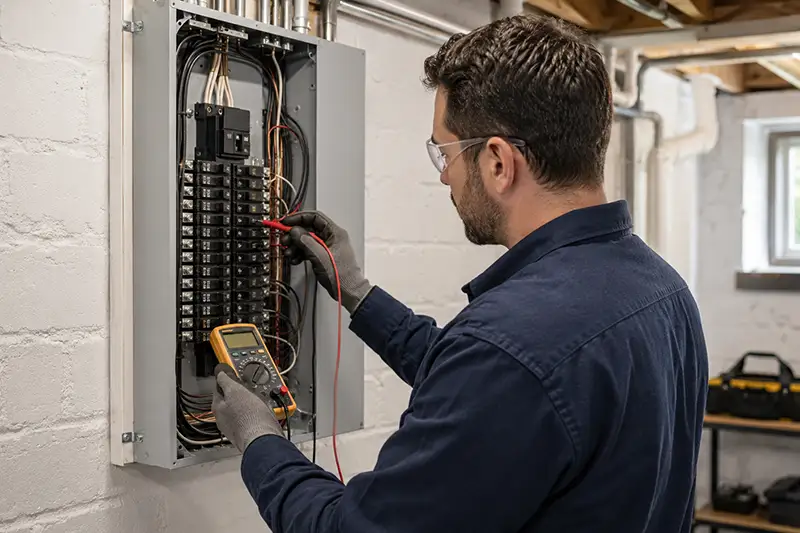
A circuit breaker that keeps tripping is doing exactly what it was designed to do: shutting off electricity when it detects a potentially unsafe condition. The cause might be a simple overloaded circuit, but repeated trips can also indicate damaged wiring, a short circuit, a ground fault, a faulty appliance or a problem inside your electrical panel.
Quick answer: If a breaker trips once, unplug or turn off the devices on that circuit before resetting it. If it trips again, will not reset, feels warm, makes noise or is accompanied by a burning smell, stop trying to reset it and contact a qualified electrician.
Repeatedly resetting a breaker without identifying the cause could allow an electrical problem to worsen.
What Does a Circuit Breaker Do?
A circuit breaker is a safety device located inside your electrical panel. Each breaker protects a specific circuit serving part of your home or business.
When electrical current exceeds what the circuit can safely handle, or when the breaker detects certain electrical faults, it automatically moves to the tripped position and interrupts the flow of electricity.
Without this protection, excessive current could overheat wiring, damage equipment or create an electrical fire risk.
How Can You Tell If a Breaker Has Tripped?
A tripped breaker does not always move completely to the “off” position. It may rest between “on” and “off.”
To identify and reset a tripped breaker:
- Turn off or unplug the devices connected to the affected circuit.
- Locate the breaker that is in the middle or tripped position.
- Move the breaker firmly to “off.”
- Move it back to “on.”
If the breaker immediately trips again, do not continue resetting it. There is likely an unresolved problem that should be evaluated.
Never hold a breaker in the “on” position or attempt to prevent it from tripping.
1. The Circuit Is Overloaded
An overloaded circuit is one of the most common reasons a circuit breaker trips. It happens when the combined electrical demand from connected appliances and devices exceeds the circuit’s safe capacity.
For example, a breaker may trip when a space heater, hair dryer, microwave or window air conditioner is used on a circuit already powering several other devices.
Signs of an overloaded circuit can include:
- A breaker that trips when multiple appliances are running
- Lights that dim when an appliance starts
- Warm outlets or switch plates
- Buzzing or crackling sounds
- A burning odor near an outlet
- Heavy dependence on power strips or extension cords
The Electrical Safety Foundation International identifies frequently tripped breakers, flickering lights, warm wall plates and burning odors as warning signs of an overloaded electrical system. ESFI electrical overload guidance
What should you do?
Unplug some devices and distribute the electrical load across other appropriate circuits. If the breaker continues to trip, or if you regularly need more power than the circuit can provide, an electrician may recommend adding a dedicated circuit or evaluating the capacity of your electrical panel.
2. An Appliance Is Malfunctioning
Sometimes the circuit is functioning properly, but an appliance connected to it is not.
Damaged cords, worn internal wiring, failing motors and defective heating elements can cause an appliance to draw too much electricity or create an electrical fault. The breaker may trip whenever that particular appliance is used.
Common examples include:
- Space heaters
- Toasters and toaster ovens
- Microwaves
- Hair dryers
- Washing machines
- Refrigerators
- Window air conditioners
- Sump pumps
- Power tools
If the breaker trips whenever one appliance starts, stop using that appliance until it can be evaluated. Do not repeatedly test a device that smells hot, produces sparks or gives you a shock or tingling sensation.
3. There Is a Short Circuit
A short circuit occurs when electrical current travels along an unintended path with very little resistance. This can produce a sudden surge of current and cause the breaker to trip immediately.
Possible causes include:
- Damaged wire insulation
- Loose electrical connections
- Faulty switches or outlets
- Damaged appliance cords
- Incorrect wiring
- Wires coming into contact where they should not
Signs of a possible short circuit include an immediate breaker trip, a burning smell, discoloration around an outlet, visible sparks or a popping sound.
Short circuits should be diagnosed by a qualified electrician. Do not remove the panel cover or open outlets and switches unless you are trained and authorized to perform electrical work.
4. There Is a Ground Fault
A ground fault occurs when electrical current leaves its intended path and flows toward the ground. This can happen when a damaged energized wire contacts grounded metal, electrical equipment or moisture.
Ground faults are especially concerning in areas where electricity and water may come together, including:
- Kitchens
- Bathrooms
- Garages
- Basements
- Laundry rooms
- Outdoor areas
- Pools and hot tubs
Ground-fault circuit interrupters, commonly called GFCIs, are designed to shut off power quickly when they detect this type of current imbalance.
If a GFCI breaker or receptacle will not reset, there may still be moisture, a connected appliance fault or a wiring problem on the circuit. Do not bypass the device or replace it with an outlet that does not provide the required protection.
The U.S. Consumer Product Safety Commission recommends testing GFCI breakers regularly and having defective devices replaced by a qualified electrician. CPSC Home Electrical Safety Checklist
5. An Arc-Fault Breaker Is Detecting Electrical Arcing
Electrical arcing occurs when current jumps across a gap between damaged or loose conductors. It can generate intense heat and may occur behind walls without being immediately visible.
Arc-fault circuit interrupters, or AFCIs, are designed to recognize electrical patterns associated with dangerous arcing and disconnect the circuit.
An AFCI breaker may trip because of:
- Damaged wiring
- Loose electrical connections
- Nails or screws penetrating a wire
- Damaged extension cords
- Worn appliance cords
- Faulty switches or receptacles
- A defective connected device
Some equipment can occasionally cause nuisance trips, but you should not assume that an AFCI is simply being overly sensitive. An electrician can test the breaker, wiring and connected equipment to determine the cause.
6. The Breaker Is Worn or Defective
Circuit breakers are mechanical and electrical safety devices. Like other components, they can wear out or become damaged.
Possible signs of a defective breaker include:
- The breaker will not remain in the “on” position
- The breaker trips without an apparent load
- The breaker feels unusually hot
- You hear buzzing or crackling from the panel
- The breaker handle feels loose
- There are signs of scorching or discoloration
- The breaker does not trip when its test button is pressed
A breaker should be replaced only with a properly rated model that is approved for use in that specific panel. Breakers are not universally interchangeable, even when they appear to fit.
7. There Is a Loose Electrical Connection
Loose connections can develop at outlets, switches, light fixtures, junction boxes or within the electrical panel. A loose connection may produce intermittent power, flickering lights, heat, buzzing or arcing.
Because the symptoms can come and go, homeowners may initially believe the problem has corrected itself. In reality, movement, temperature changes or equipment operation may cause the connection to fail intermittently.
Loose electrical connections can be difficult to locate without appropriate testing equipment. They should be evaluated before they create additional heat or damage.
8. Water or Moisture Is Affecting the Circuit
Water intrusion can cause ground faults, corrosion and damage to electrical components. Breaker trips involving a basement, outdoor circuit, bathroom, garage, pool, sump pump or exterior lighting may be related to moisture.
Common sources include:
- A leaking pipe
- Basement water
- Condensation
- Damaged outdoor outlet covers
- Water entering exterior fixtures
- Roof or wall leaks
- Moisture around a sump pump
- A wet extension cord or outdoor appliance
Do not touch wet electrical equipment or stand in water while attempting to reach a panel, switch or outlet. If flooding or active water intrusion is present, stay away from the affected area and contact the appropriate emergency or electrical professionals.
9. The Circuit Needs to Be Dedicated
Some appliances and equipment require a dedicated circuit so that they are not sharing electrical capacity with other devices.
Depending on the equipment and installation, dedicated circuits may be needed for:
- Electric ranges
- Clothes dryers
- Microwaves
- Dishwashers
- Heating and cooling equipment
- Sump pumps
- Well pumps
- Hot tubs
- EV chargers
- Certain workshop tools
- Commercial equipment
If a breaker trips whenever a major appliance operates alongside lights, outlets or other equipment, the circuit design and electrical load should be reviewed.
10. Your Electrical Panel May Not Meet Your Current Needs
Repeated breaker trips can sometimes indicate that an older or undersized electrical system is struggling to support modern demand.
This is especially relevant if you are planning to add:
- A Level 2 EV charger
- A heat pump
- Central air conditioning
- An electric water heater
- An electric range or dryer
- A hot tub or pool
- A home addition
- A workshop
- Solar panels or battery storage
A full panel does not automatically mean you need a larger electrical service, and an open breaker space does not guarantee that adequate capacity is available.
An electrician can perform a load calculation and determine whether the best solution is a new circuit, subpanel, panel replacement, load-management system or service upgrade.
Is It Safe to Reset a Tripped Breaker?
It is generally reasonable to reset a breaker once after turning off and unplugging the equipment on the affected circuit, provided there is no smoke, heat, burning odor, visible damage or water nearby.
Do not continue resetting the breaker if:
- It trips immediately
- It trips repeatedly
- It will not remain on
- The panel or breaker feels warm
- You smell burning plastic or hot insulation
- You hear buzzing, sizzling or crackling
- You see sparks, smoke or scorch marks
- An outlet or switch is discolored
- Someone received an electrical shock
- The panel has water damage or corrosion
The National Fire Protection Association includes frequent breaker trips, warm or discolored outlets and tingling sensations from appliances among the warning signs that warrant electrical attention. NFPA home electrical safety guidance
When Is a Tripping Breaker an Emergency?
Call 911 and leave the building if you see fire or significant smoke.
Prompt electrical attention is also important if you notice:
- A burning odor that cannot be traced to a safely disconnected appliance
- Visible sparks or arcing
- A hot or scorched electrical panel
- Buzzing or sizzling from the panel
- Melted outlets, switches or wiring
- Water inside or around electrical equipment
- Repeated shocks or tingling from appliances
- Partial power loss affecting multiple areas
- A breaker that trips immediately after every reset
Do not remove the electrical panel cover or touch exposed wiring. Even when individual breakers are switched off, parts of the panel may remain energized.
Can I Replace a Tripping Breaker With a Larger One?
No. Installing a higher-amperage breaker without confirming that the circuit wiring is designed for it can allow the wiring to carry more current than it can safely handle.
The breaker protects the wiring, not just the appliances connected to it. Increasing the breaker size without properly upgrading the circuit can create an overheating and fire hazard.
A qualified electrician should identify why the breaker is tripping and confirm that the breaker, wiring and connected load are correctly matched.
Why Does My Breaker Trip at the Same Time Every Day?
A breaker that trips on a predictable schedule may be reacting to equipment that operates automatically, such as:
- Heating or cooling equipment
- A water heater
- A sump pump
- A well pump
- Exterior lighting
- Pool equipment
- Refrigeration equipment
- Commercial machinery
- Appliances controlled by timers
Keep a record of the time the breaker trips and which equipment was operating. This information can help an electrician isolate the cause.
Why Does the Breaker Keep Tripping With Nothing Plugged In?
A breaker can trip even when nothing is visibly plugged into the affected outlets. The circuit may also supply hardwired lighting, smoke alarms, outdoor equipment, appliances or outlets in another room.
If all known equipment is disconnected and the breaker still trips, possible causes include damaged wiring, a loose connection, moisture, a faulty breaker or an unidentified hardwired load.
Leave the breaker off and schedule an electrical inspection.
Circuit Breaker Troubleshooting in Ulster County
Homes and businesses in Ulster County include historic buildings, renovated properties, modern construction and facilities with complex electrical demands. A tripping breaker may result from a single faulty appliance, but it can also reveal a problem with the circuit, wiring or electrical panel.
Jaffer Electric provides residential, commercial and industrial electrical services in Kingston and throughout Ulster County. Service is also available in Dutchess, Columbia and Greene counties.
If your circuit breaker keeps tripping, Jaffer Electric can inspect the affected circuit, identify the cause and recommend the appropriate repair or electrical upgrade.
Contact Jaffer Electric at (845) 338-1330 or visit jafferelectric.com to request electrical service.
Frequently Asked Questions
Why does my breaker trip when I use a space heater?
Space heaters draw a significant amount of electricity. The circuit may become overloaded if the heater is used alongside other appliances or devices. Space heaters should be plugged directly into an appropriate wall outlet, not an extension cord or power strip.
Why does my breaker trip when the air conditioner starts?
The air conditioner may be sharing a circuit, drawing excessive current during startup or experiencing an equipment problem. The breaker, circuit and HVAC equipment may need to be evaluated.
Should I unplug everything before resetting a breaker?
Yes. Turn off or unplug devices on the affected circuit before resetting the breaker. This reduces the electrical load and may help identify whether a particular appliance is causing the problem.
How many times can I reset a tripped breaker?
There is no safe universal number of repeated resets. If the breaker trips again after the connected devices have been turned off or unplugged, leave it off and have the cause investigated.
Does a tripping breaker mean I need a new electrical panel?
Not necessarily. The cause may be an overloaded circuit, faulty appliance, damaged wiring, loose connection or defective breaker. A professional inspection can determine whether you need a repair, dedicated circuit, subpanel or panel upgrade.
Can a circuit breaker trip because of bad weather?
Yes. Rain, snow, wind and moisture can affect outdoor outlets, exterior lighting, underground wiring and other exposed electrical equipment. Storm-related power fluctuations can also affect certain systems.