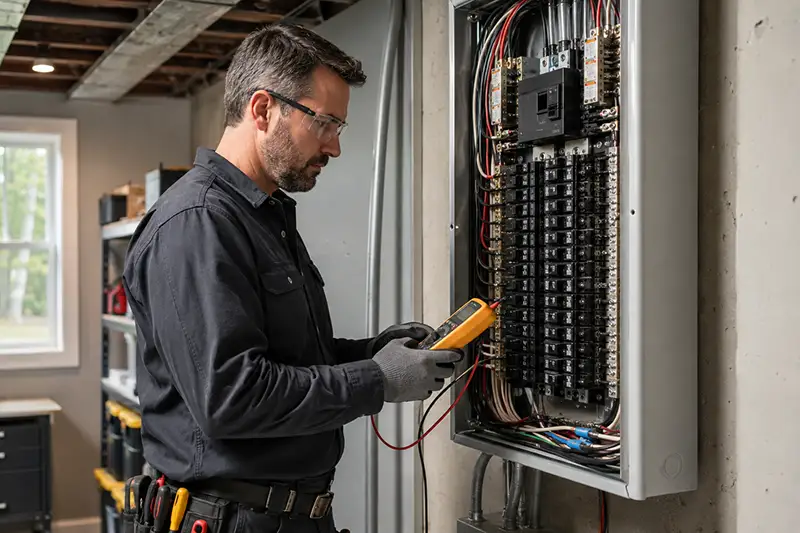
Your electrical panel is the control center of your home’s electrical system. It receives electricity from the utility and distributes it through individual circuits to your lights, outlets, appliances and equipment. When the panel is outdated, damaged or unable to handle your electrical demand, you may experience frequent breaker trips, flickering lights, unusual sounds or other warning signs.
Quick answer: You may need an electrical panel upgrade if your breakers trip repeatedly, your lights dim when appliances turn on, the panel feels warm, you notice rust or scorching, or your current service cannot support planned additions such as an EV charger, heat pump or central air-conditioning system. These symptoms do not automatically mean the entire panel must be replaced, but they should be evaluated by a qualified electrician.
For homeowners in Ulster County and throughout the Hudson Valley, an electrical panel inspection can determine whether the problem requires a repair, a dedicated circuit, a subpanel, a panel replacement or a complete electrical service upgrade.
What Is an Electrical Panel Upgrade?
The terms “panel replacement” and “electrical service upgrade” are sometimes used interchangeably, but they can describe different projects.
A panel replacement involves removing the existing electrical panel and installing a new one. This may be recommended when the panel is damaged, obsolete or no longer provides enough circuit space.
A service upgrade increases the amount of electricity the property can safely receive. For example, a home may be upgraded from a smaller electrical service to a larger-capacity service to support modern appliances and equipment.
A subpanel adds circuit space but does not necessarily increase the total electrical capacity available to the property.
The right solution depends on the condition of your equipment, the capacity of your electrical service, your current electrical load and your future plans.
1. Your Circuit Breakers Keep Tripping
A circuit breaker is designed to shut off electricity when it detects an overload, short circuit or another potentially unsafe condition. An occasional trip caused by using too many appliances on one circuit may not indicate a failing panel. Breakers that trip repeatedly, however, should not be ignored.
Frequent trips could indicate:
- An overloaded circuit
- A defective breaker
- Damaged wiring
- A short circuit or ground fault
- Insufficient capacity for the home’s electrical demand
- A problem with an appliance or connected device
Never replace a breaker with one rated for higher amperage simply to stop it from tripping. The breaker must be properly matched to the circuit and wiring it protects.
The National Fire Protection Association identifies frequently tripped breakers and blown fuses as warning signs of a potential home electrical problem. NFPA home electrical safety guidance
2. You Still Have a Fuse Box
Fuses can provide circuit protection when the system is properly installed and maintained, but an older fuse box may signal that the home’s electrical system was designed for a much smaller electrical load.
Today’s homes may need to power computers, large televisions, air conditioners, electric ranges, heat pumps, home offices, hot tubs and vehicle chargers. An older system may not have the capacity or circuit space to support those demands safely.
A fuse box does not automatically mean your home is unsafe. It does mean that a professional inspection is worthwhile, particularly if fuses blow frequently, improperly sized fuses have been installed or you are planning renovations or new electrical equipment.
3. Your Lights Flicker or Dim
A loose lightbulb or failing fixture can cause an isolated light to flicker. When lights throughout the house dim or flicker as major appliances turn on, the problem could involve overloaded circuits, loose electrical connections, voltage fluctuations or inadequate electrical capacity.
Pay attention to when the problem occurs. Does it happen when your air conditioner, microwave, well pump, dryer or another high-demand appliance starts? Does it affect one room or multiple areas of the house?
Flickering or dimming lights are among the warning signs associated with an overloaded electrical system, according to the Electrical Safety Foundation International. ESFI overload warning signs
4. The Panel, Outlets or Switches Feel Warm
An electrical panel, outlet cover or switch plate should not feel unusually hot. Excessive heat can indicate overloading, a loose connection, damaged wiring or failing electrical equipment.
Other heat-related warning signs include:
- Brown or black discoloration
- Melted plastic
- Scorch marks
- A hot insulation smell
- Crackling or sizzling sounds
Stop using an affected outlet or switch and have the condition inspected. The U.S. Consumer Product Safety Commission advises homeowners to take unusually warm outlets and switches seriously because they may indicate unsafe wiring or overheating. CPSC Home Electrical Safety Checklist
5. You Hear Buzzing, Crackling or Sizzling
Electricity should move through your panel and wiring without producing persistent buzzing, crackling or sizzling sounds.
These sounds can be associated with loose connections, damaged breakers or electrical arcing. They may originate from the main panel, an outlet, a switch or a light fixture.
Do not remove the electrical panel cover or attempt to tighten internal connections yourself. Electrical panels contain energized components that can remain dangerous even when individual branch breakers are switched off.
6. You Smell Burning Near the Panel or an Outlet
A burning-plastic or hot-insulation odor can indicate that wiring or another electrical component is overheating. This requires immediate attention, particularly when accompanied by smoke, sparks, discoloration or a hot panel.
If you see smoke or fire, leave the building and call 911. If there is a burning smell without visible fire, stop using the affected equipment and contact a qualified electrician promptly. Only disconnect power if you can do so safely.
The CPSC includes the smell of burning plastic, warm faceplates and circuits that no longer work among the warning signs of a possible electrical fire hazard. CPSC electrical safety information
7. Your Panel Is Full
A panel can run out of available breaker spaces as new circuits are added over time. This commonly becomes an issue when homeowners renovate a kitchen, finish a basement, build an addition or install new electrical equipment.
A full panel does not always require a complete service upgrade. Depending on the panel’s capacity and condition, an electrician may recommend:
- Reconfiguring appropriately installed circuits
- Installing a listed breaker approved for the panel
- Adding a subpanel
- Replacing the existing panel
- Increasing the electrical service capacity
An open breaker space also does not guarantee that the system has enough capacity for another high-demand circuit. A load calculation may be needed to evaluate the home’s total electrical demand.
8. You Depend Heavily on Extension Cords and Power Strips
Extension cords are intended for temporary use. If you depend on them every day because your home does not have enough outlets or circuits, your electrical system may no longer meet the way you use the property.
Common examples include running extension cords for home-office equipment, window air conditioners, kitchen appliances or entertainment systems.
The solution may be as simple as adding properly located outlets or dedicated circuits. In other cases, the panel may lack the space or capacity needed to support those improvements.
9. The Panel Shows Rust, Corrosion or Water Damage
Water and electrical equipment are a dangerous combination. Rust, corrosion, condensation or evidence of water entering the panel can damage connections and interfere with the safe operation of breakers.
Possible sources include:
- Plumbing leaks
- Basement moisture
- Condensation
- Exterior water intrusion
- Problems around the electrical meter or service entrance
Do not touch a wet or visibly damaged electrical panel. Contact a qualified electrician so the equipment and the source of the moisture can be evaluated safely.
10. You Are Adding High-Demand Electrical Equipment
Even if your current panel appears to be working normally, your upcoming project may change the home’s electrical requirements.
Have the system evaluated before installing:
- A Level 2 EV charger
- A heat pump or central air-conditioning system
- An electric range or clothes dryer
- An electric water heater
- A hot tub or pool
- A workshop with large power tools
- A home addition
- Solar panels or battery storage
- A standby generator
An electrician can perform a load calculation and determine whether the existing system can support the new equipment. You may need only a dedicated circuit, but some projects require a subpanel, panel replacement or electrical service upgrade.
Does an Older Electrical Panel Automatically Need to Be Replaced?
No. Age alone does not determine whether a panel needs replacement. Its condition, design, available capacity, compatibility with replacement components and ability to meet the property’s electrical needs are also important.
An older panel should be professionally evaluated if you are experiencing electrical problems, buying or renovating an older home, adding major equipment or are unsure whether previous electrical work was completed correctly.
Should I Upgrade From 100-Amp to 200-Amp Service?
Not every home with 100-amp service needs a 200-amp upgrade. The answer depends on your existing electrical load and what you plan to add.
A home that uses gas for heating, cooking and hot water may have very different electrical requirements from an all-electric home with a heat pump, electric range, electric dryer and EV charger.
A professional load calculation helps determine whether the existing service is sufficient. It can also prevent you from paying for a larger upgrade when a dedicated circuit, subpanel or another solution would meet your needs.
What Happens During an Electrical Panel Inspection?
During an evaluation, an electrician may examine:
- The panel’s manufacturer, rating and overall condition
- The size of the electrical service
- Breakers, connections and circuit labeling
- Signs of heat, corrosion or physical damage
- Available breaker space
- Grounding and bonding
- The home’s current electrical load
- Planned appliances, renovations or equipment
- Relevant permit, inspection and code requirements
After the inspection, the electrician should be able to explain whether the system needs a repair, additional circuits, a new panel or a larger electrical service.
Electrical Panel Upgrades in Ulster County and the Hudson Valley
Homes throughout Ulster County range from historic properties with older wiring to newly renovated homes with modern electrical demands. Regardless of your home’s age, the electrical system must be able to support the way you use it today.
Jaffer Electric provides residential, commercial and industrial electrical services in Kingston and throughout Ulster County, with service also available in Dutchess, Columbia and Greene counties. Our electricians can evaluate your electrical panel, identify safety or capacity concerns and recommend the appropriate solution for your property.
If your breakers keep tripping, your lights are flickering or you are planning a major electrical addition, schedule an evaluation before the problem becomes more serious.
Contact Jaffer Electric at (845) 338-1330 to discuss an electrical panel inspection or upgrade.
Frequently Asked Questions About Electrical Panel Upgrades
How do I know if my electrical panel is overloaded?
Possible signs include frequently tripped breakers, dimming lights, buzzing sounds, warm electrical components and difficulty operating several appliances at the same time. A load calculation is the best way to determine whether the service has adequate capacity.
Can I replace an electrical panel myself?
Electrical panel replacement is not an appropriate do-it-yourself project. It involves hazardous electrical components, utility coordination and local permit and inspection requirements. The work should be performed by a qualified electrical contractor.
Will a new electrical panel stop my breakers from tripping?
Only if the tripping is caused by a defective, overcrowded or insufficient system. Breakers may also trip because of an overloaded branch circuit, damaged wiring, a short circuit or a faulty appliance. The cause should be diagnosed before recommending replacement.
Do I need a panel upgrade for a Level 2 EV charger?
Not necessarily. Some homes have enough capacity and panel space for a dedicated EV-charger circuit. Others may need load-management equipment, a subpanel, panel replacement or service upgrade. An electrician should evaluate the system before installation.
Is a panel upgrade the same as rewiring the house?
No. A panel upgrade replaces or expands the equipment that distributes electricity through the home. Rewiring replaces some or all of the electrical wiring. An inspection can determine whether either or both services are needed.